
Scientific Evidence of Shirodhara: Bridging Ancient Wisdom with Modern Science
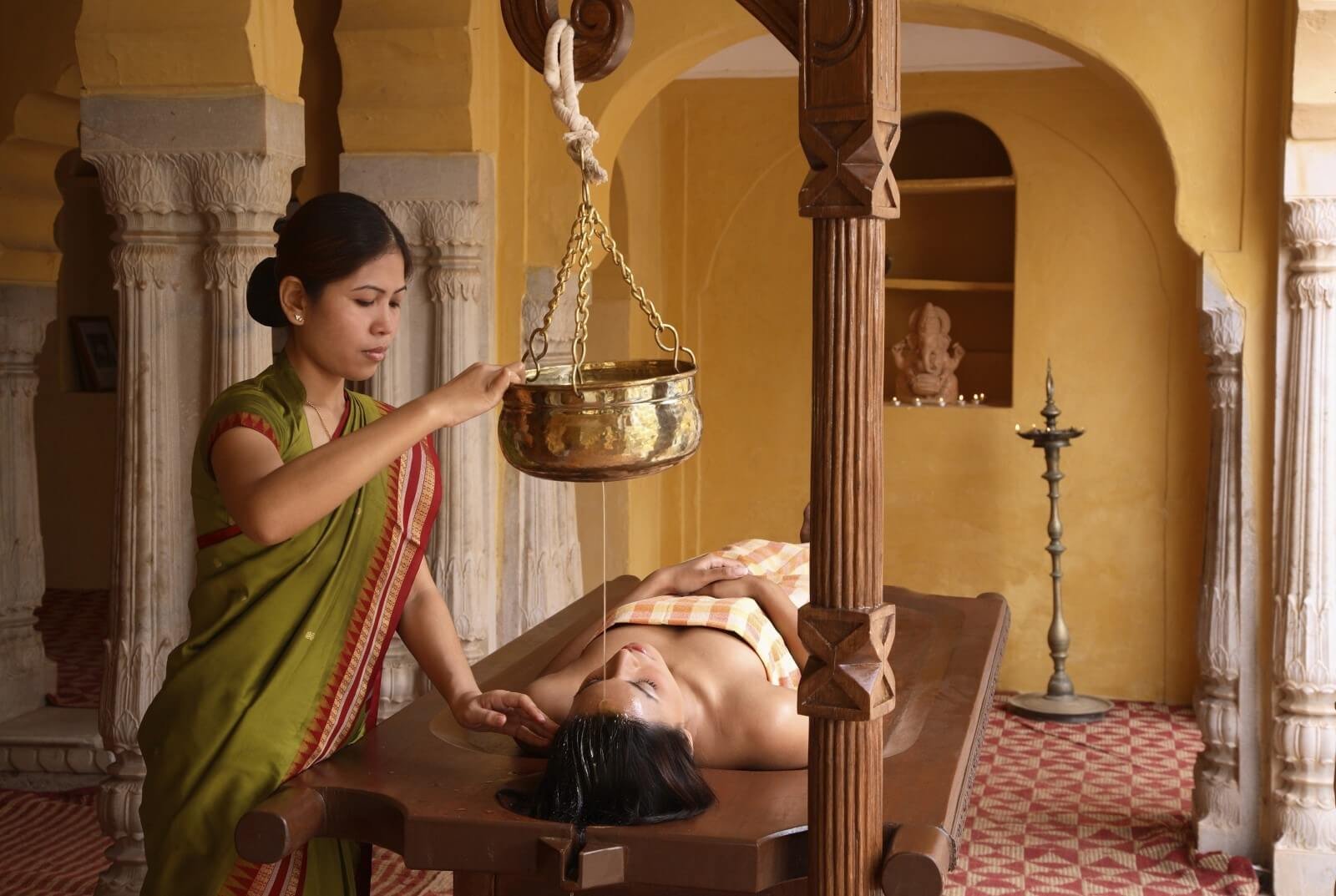
In the world of Ayurveda, Shirodhara stands out as one of the most iconic and deeply soothing therapies. Originating from the heart of Kerala’s Panchakarma tradition, this gentle technique has been used for centuries to treat a wide range of mental and neurological disorders—offering relief from insomnia, anxiety, depression, headaches, and even schizophrenia and hypertension.
But in today’s evidence-driven world, an important question arises: What is the scientific basis of Shirodhara’s effectiveness? This article dives into the growing body of research behind Shirodhara and how technology is being used to study and refine this ancient therapy.
What is Shirodhara?
The word Shirodhara comes from Sanskrit: Shiro means head, and Dhara means stream or flow. The procedure involves the continuous pouring of warm, herbalized oil or liquid over the forehead, particularly targeting the “third eye” area—the location of the Ajna chakra, associated with intuition and awareness.
Typically, a session lasts around 45 minutes, inducing a meditative, trance-like state of relaxation. The therapy is part of a broader Panchakarma detox process and is tailored based on individual body constitution (prakriti) and health condition.
Types of Shirodhara
There are several forms of Shirodhara, depending on the liquid used:
- Taila Dhara: Uses warm, medicated oil made with herbs, water, and sesame.
- Takra Dhara: Uses buttermilk (takra) derived from cow’s milk; commonly used for skin issues or Pitta imbalances.
- Kshira Dhara: Involves cow’s milk combined with herbs like Sida cordifolia or Asparagus racemosus to calm and nourish.
Each medium has its own therapeutic value and is chosen based on the doshic imbalance and condition being treated.
Modern Scientific Study of Shirodhara
While Shirodhara has traditionally been praised for its mind-calming and nervous system-soothing effects, scientific studies have only recently begun to explore its measurable impacts.
One of the main challenges in studying Shirodhara scientifically has been reproducibility—the difficulty of creating a standardized, consistent experience in every session. To address this issue, researchers developed a computer-controlled healing robot that can administer Shirodhara in a precise and repeatable manner, ensuring uniform flow, temperature, and timing.
This breakthrough has allowed for a more rigorous evaluation of the therapy under controlled settings.
Key Findings from Shirodhara Studies
Researchers have conducted psychometric and physiological assessments to analyze the impact of Shirodhara on clients and even practitioners. Here are some notable findings:
1. Reduction in Anxiety
Taila Dhara, when administered by the healing robot, showed a significant reduction in anxiety scores measured using validated psychological scales. Participants reported a deep sense of relaxation, clarity, and emotional release post-treatment1.
2. Induction of Altered States of Consciousness (ASC)
Interestingly, studies found that Shirodhara may induce altered states of consciousness, similar to a meditative or semi-hypnotic state. This was assessed through ASC measurement tools, and participants reported sensations such as time distortion, lightness, expanded awareness, and a sense of “floating”2.
3. Physiological Effects on Practitioners
Ayurveda often acknowledges the interaction between therapist and client as a vital component of the healing process. Surprisingly, the studies also evaluated physiological changes in practitioners, finding that Shirodhara sessions impacted their heart rate variability (HRV), skin conductivity, and stress levels—often in calming ways.
This suggests that Shirodhara can have mutual therapeutic benefits for both the receiver and the provider of the therapy.
Shirodhara and the Nervous System
The calming effect of Shirodhara is believed to stem from its impact on the hypothalamus, which helps regulate hormones and maintain homeostasis. The continuous flow of warm liquid on the forehead activates pressure points that stimulate the pituitary gland and parasympathetic nervous system, promoting deep relaxation, stress reduction, and hormone balance.
These effects make Shirodhara especially helpful for disorders associated with Vata dosha—such as insomnia, anxiety, and neurological imbalances.
The Future of Ayurvedic Research
The integration of technology in Ayurvedic research opens new possibilities for validating ancient therapies like Shirodhara. By using computerized systems for reproducibility, scientists are beginning to unravel the physiological and psychological mechanisms behind treatments that have been passed down for generations.
This research not only helps bridge the gap between modern science and traditional wisdom, but also builds trust and credibility for holistic approaches in mainstream healthcare.
FAQs: Scientific Evidence of Shirodhara
Q: Is Shirodhara scientifically proven to work?
A: While more large-scale studies are needed, existing research shows that Shirodhara has measurable benefits in reducing anxiety, inducing meditative brain states, and promoting overall well-being.
Q: What makes the healing robot significant in this research?
A: The healing robot allows for consistent delivery of treatment, making it easier to measure the effects scientifically and eliminate human error or variability.
Q: Does Shirodhara affect brain activity?
A: Yes, studies indicate that Shirodhara may alter brain wave patterns and produce alpha waves, associated with deep relaxation and meditation.
Q: Can Shirodhara be used alongside modern therapies?
A: Absolutely. Many integrative medicine practitioners recommend Shirodhara as a complementary therapy for stress-related conditions.
Q: Is there a difference in effect between oil and buttermilk Shirodhara?
A: Yes. Taila Dhara (oil-based) is deeply nourishing and grounding, ideal for Vata disorders, while Takra Dhara (buttermilk-based) is cooling and more suited for Pitta- related conditions.
As science continues to explore the physiological and psychological effects of Ayurvedic therapies like Shirodhara, we are witnessing a promising convergence of ancient healing and modern innovation. The initial evidence supports what Ayurveda has known for millennia—that true healing comes from balance, rhythm, and deep nourishment of body, mind, and spirit.
Whether you’re seeking relief from chronic stress, insomnia, or just looking to reconnect with your inner self, Shirodhara is more than a treatment—it’s a profound experience of stillness and restoration.
Testimonials:
https://maps.app.goo.gl/2NtGt9zAHdJgLLww8
https://maps.app.goo.gl/c4zDiRFhiDN1YxYT6
https://maps.app.goo.gl/y6j7z4zAMAgjM9rs9
Footnotes
- Mahapatra, C., et al. (2009). Study on the effect of Shirodhara on anxiety and mood profiles. Journal of Ayurveda and Integrative Medicine, 1(3), 160–163.
- Yamamoto, , et al. (2008). Physiopsychological effects of Taila Dhara using a computerized Shirodhara robot. Traditional & Kampo Medicine Research Institute, Japan.
