If you run warm, think fast and feel your temper flare when lunch is late, chances are you are a Pitta dosha type. So what is Pitta dosha? In Ayurveda, it is the energy of fire and water that governs digestion, metabolism and transformation in your body and mind.
This guide explains Pitta in plain English. You’ll learn the five Pitta dosha types inside your body and the traits that mark a Pitta person. You’ll also see the difference between your natural constitution and your current state. Then we’ll look at the Pitta dosha diet, herbs and daily habits that help you balance Pitta dosha safely.
Pitta dosha in plain English
Pitta dosha is the principle of heat and transformation in Ayurveda. It turns the food you eat into energy and the light you see into images. It also turns raw experience into understanding. Wherever something changes form in your body, Ayurveda sees Pitta working.
Ayurveda describes three doshas (the functional energies that shape your body and mind): Vata, Pitta and Kapha. Each dosha combines two of the five elements (pancha mahabhuta). Pitta pairs the fire element (tejas) with a smaller amount of water (jala). The water keeps the fire liquid and contained, like oil holding the flame in a lamp.
Classical texts such as the Charaka Samhita describe Pitta through its qualities (gunas). Each quality has a physical signature you can learn to recognise:
- Hot: warm skin, a strong appetite and a low tolerance for heat.
- Sharp: a quick mind, precise speech and a penetrating gaze.
- Light and slightly oily: a lean frame and skin with a natural sheen.
- Liquid and spreading: sweat, acidity and inflammation that can move around your body.
Pitta concentrates in your small intestine and stomach. It also gathers in your liver, blood, eyes and skin. Its main seat is the small intestine, which is why digestion is key to balancing your dosha.
Here is how Pitta compares with the other two doshas, so you can see where it fits.
Physical traits
These are the physical signs Ayurvedic practitioners look for most often in a Pitta constitution:
- A medium, athletic build that gains and loses weight fairly evenly.
- A warm body that feels the heat easily and sweats readily.
- Sensitive or freckled skin that may flush, burn or break out.
- Fine hair that may grey early or thin with time.
- A strong appetite and thirst, with discomfort when meals run late.
- Bright, sharp eyes that can be sensitive to glare.
- Regular or loose bowel movements rather than constipation.
Mental and emotional traits
Pitta minds are focused, organised and driven. You likely learn quickly and speak with precision. You probably enjoy a challenge and set high standards for yourself. People often look to Pitta types to lead.
The shadow side appears when Pitta runs hot. Impatience, criticism and anger surface faster. You may push through hunger and overwork despite fatigue. Then you might find it hard to switch off at night. Ayurveda describes Pitta sleep as moderate in length. A 2025 study on sleep and Prakriti in the International Journal of Health Sciences and Research places Pitta types between the long, deep sleep of Kapha and the lighter sleep of Vata.
Prakriti vs Vikriti: your nature and your current state
Prakriti (your natural constitution) is the dosha blend you were born with. Vikriti (your current imbalance) is the state your doshas are in today. Ayurveda holds that your Prakriti forms at conception and stays largely stable for life. Your Vikriti shifts with food and season. It also moves with stress, sleep and age.
This distinction shapes every Pitta dosha treatment plan. You might be Pitta by nature and feel well. Or you might be Vata by nature yet show Pitta signs after a summer of long hours and late dinners. The goal of care is to bring your Vikriti back toward your Prakriti, not to change who you are.
Signs your Pitta is running too hot
Aggravated Pitta tends to announce itself through heat, sharpness and inflammation. Watch for these common signs:
- Heartburn, acid reflux or a burning feeling after meals.
- Loose stools or urgent bowel movements.
- Skin redness, acne, rashes or rosacea flares.
- Feeling overheated, flushed or sweaty when others feel fine.
- Red or irritated eyes.
- Irritability, impatience or a short fuse.
- Waking between 10pm and 2am with a busy mind.
These signs overlap with many medical conditions. Please see your GP if any persist. Reflux troubling you more than twice a week deserves a medical check. Yellowing of your skin or eyes and blood in your stool always need prompt medical attention.
What the research says about Prakriti
Prakriti assessment is still developing as a science. Fewer than a third of the studies on the subject have been tested for accuracy or consistency. The verdict is that constitution type can’t yet be measured with clinical confidence.
Early biological research is still worth watching. A 2025 University of Colombo review of gut microbiome studies across Prakriti types brought together six studies and found distinct microbial patterns for each constitution. Pitta types showed more activity in pathways tied to oxidative stress and toxin breakdown. These small cross-sectional studies show an association rather than cause and effect.
Within Ayurveda itself, the debate is healthy. A 2025 commentary in the Indian Journal of Medical Ethics on the tridosha paradigm makes the case for keeping the practical side of the three-dosha model while setting aside its speculative claims. Ayurvedic Wellness Centre works the same way. We use Prakriti as a lens for personalising your care and never use it to replace a medical diagnosis.
The simplest way to start is our free Ayurvedic dosha quiz. It gives you a first read of your constitution, which a practitioner can then refine in person.
The five Pitta dosha types
Ayurveda divides Pitta into five subtypes (upadoshas), each with its own seat and job in your body. These Pitta dosha types explain why a Pitta imbalance can show up in your gut one month and your skin the next. Knowing them helps you read your signals more clearly.
Pachaka Pitta: your digestive fire
Pachaka Pitta (the digesting Pitta) lives in your stomach and small intestine. It breaks food down and separates nourishment from waste. Ayurveda links it closely to your digestive fire (agni), so a healthy Pachaka Pitta shows as a steady appetite and comfortable digestion. When it runs too hot, you may notice heartburn, loose stools or sharp hunger that turns into irritability.
Ranjaka Pitta: the colour of your blood
Ranjaka Pitta (the colouring Pitta) is based in your liver, spleen and stomach. Classical texts credit it with giving blood its colour and supporting healthy blood formation. Ayurveda links excess Ranjaka Pitta to heat in the blood, which causes rashes, irritability and a flushed complexion.
Sadhaka Pitta: the fire of the heart and mind
Sadhaka Pitta (the accomplishing Pitta) sits in the heart in Ayurvedic physiology. It governs ambition, determination and your ability to digest emotions and ideas. In balance, it gives clarity and drive. Out of balance, it can lead to perfectionism, frustration and burnout.
Alochaka Pitta: the fire behind your eyes
Alochaka Pitta (the seeing Pitta) lives in your eyes and governs visual perception. Ayurveda links excess heat here to red, dry or light-sensitive eyes. Many people experience this after long days at a screen under bright Australian light.
Bhrajaka Pitta: the glow of your skin
Bhrajaka Pitta (the shining Pitta) lives in your skin. It regulates your complexion and body temperature and shapes how your skin responds to oils and sunlight. When balanced, your skin has a natural glow. When aggravated, Ayurveda associates it with redness, breakouts and heat rashes.
The Pitta dosha diet: foods that cool and calm
A Pitta dosha diet favours foods that taste sweet, bitter or astringent. It cuts back on pungent, sour and salty foods.
Ayurveda groups flavour into six tastes (rasa), and each taste either adds heat or takes it away. Sweet, bitter and astringent tastes cool and settle Pitta. Pungent, sour and salty tastes add fire.
“Sweet” here means naturally sweet foods like rice, milk and ripe fruit, not refined sugar. Bitter tastes come from leafy greens and herbs. Astringent tastes are the drying and puckering ones that come from legumes, pomegranate and green apples. The table below gives you a practical starting point.
Make the most of Australian produce
Australian summer produce suits Pitta beautifully. Watermelon, mangoes, cucumbers and lettuce are at their best when you need them most. Sweet stone fruit, coconut and fresh coriander round out a cooling summer table. For a Pitta body, a cooling diet becomes more useful with every hot summer.
When and how you eat matters
For Pitta, timing matters as much as food choice. Ayurveda teaches that digestive fire peaks between 10am and 2pm and recommends making lunch your largest meal. Skipping meals tends to inflame Pitta, which is why a missed lunch often leads to shorter temper by 3pm.
Keep dinner lighter and finish it a few hours before bed. Lying down after a large meal triggers reflux, which often worsens at night. For a Pitta stomach, an early and simple dinner is one of the kindest habits you can build.
A few small habits help your Pitta dosha diet work harder:
- Sip cool or room-temperature water throughout the day. Iced drinks can dull digestion, so cool beats freezing.
- Try coconut water or fennel tea on hot afternoons.
- Cook with ghee or coconut oil rather than mustard or sesame oil in summer.
- Eat sitting down in a calm space instead of at your desk.
- Keep coffee to one cup and take it with food rather than on an empty stomach.
Pitta dosha herbs: what tradition and research tell us
The classic Pitta dosha herbs share a cooling and soothing nature. Each has a long traditional history, and some now have early clinical research behind them.
Herbs are medicines, so quality and supervision matter. Read the safety section below before you buy anything.
Amalaki (Indian gooseberry)
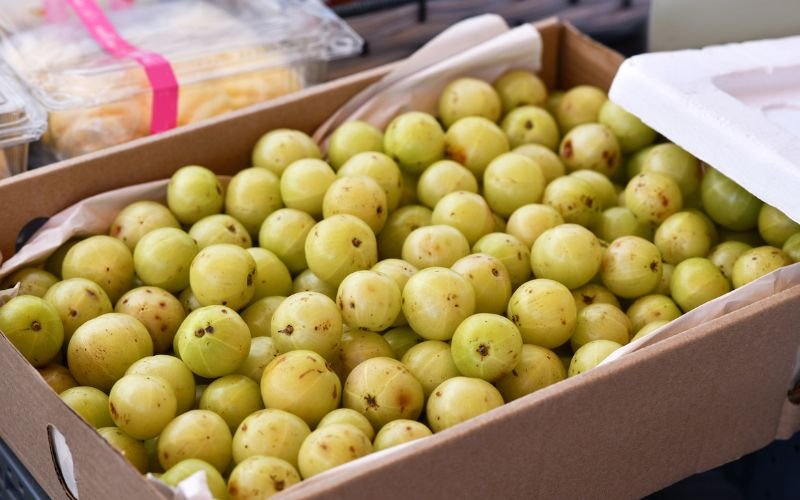
Amalaki (Emblica officinalis) is a sour fruit that Ayurveda still classifies as cooling, which makes it unusual. It is the main ingredient in chyawanprash and one of the three fruits in triphala. Ayurveda values it as a gentle rejuvenating tonic (rasayana) for Pitta.
Modern research focuses on its metabolic effects. In a 2025 randomised clinical study of amla extract in Complementary Medicine Research, 40 adults with obesity took amla extract for 90 days. The group taking 500mg twice daily saw reductions in visceral fat, waist circumference and body weight. It was a small open-label trial without a placebo group, so it points to potential rather than proof.
Shatavari
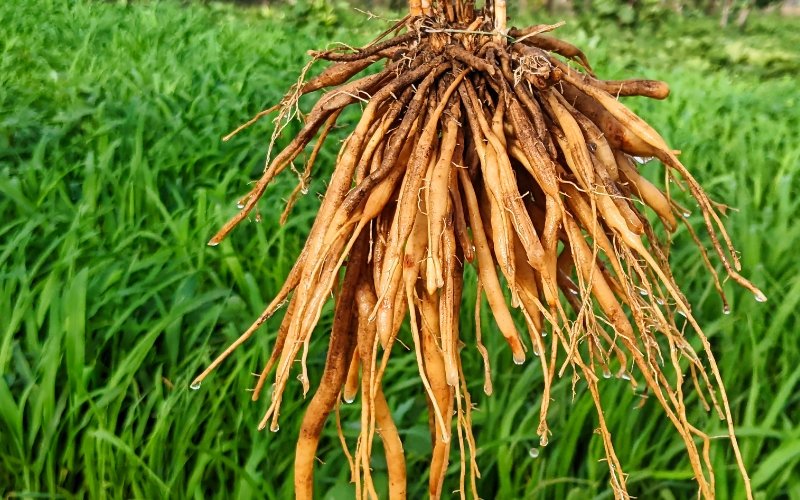
Shatavari (Asparagus racemosus) is a sweet, cooling root that Ayurveda treats as a rasayana, especially for women. Practitioners traditionally use it for Pitta symptoms during hormonal transitions, such as hot flushes and irritability.
In a 2025 placebo-controlled trial of shatavari in Frontiers in Reproductive Health, 135 women aged 45 to 65 took shatavari, shatavari with ashwagandha or a placebo for eight weeks. Menopause symptom scores fell by about 13 points in both shatavari groups and by about 3 points on placebo. Side effects were mild and uncommon. Because shatavari is traditionally used for hormonal balance, talk to your GP first if you have a hormone-sensitive condition or take hormone therapy.
Brahmi
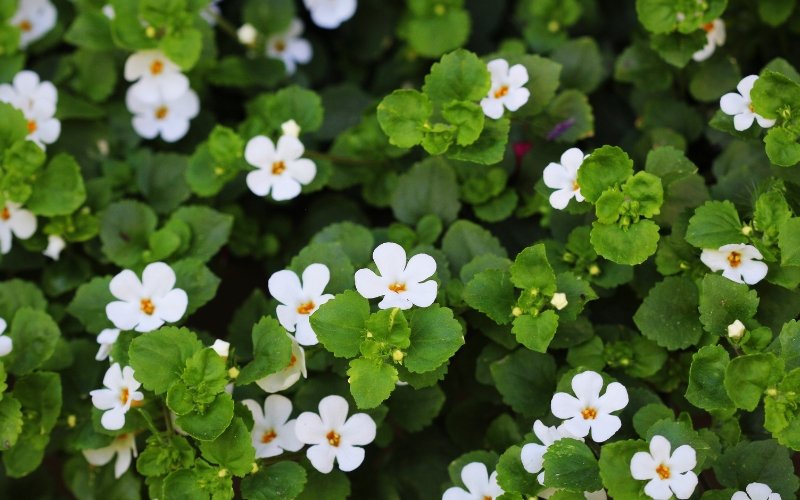
Brahmi (Bacopa monnieri) is Ayurveda’s classic herb for a hot, overworked mind. Its bitter and cooling nature suits Sadhaka Pitta, the subtype tied to ambition and emotional processing.
A 2026 network meta-analysis of brahmi and ginkgo in Phytomedicine pooled randomised trials in healthy adults. Brahmi at 600mg or more a day improved working memory more than lower doses. Some people taking brahmi notice an unsettled stomach, queasiness or a dry mouth. The Merck Manual’s professional guide to bacopa flags possible interactions with thyroid medication and with some drugs processed by the liver.
Product quality matters just as much. In late 2025 the Therapeutic Goods Administration (TGA) told Australians to stop taking one imported brand in its TGA safety alert on Brahmi Vati tablets, after testing found extremely high levels of heavy metals.
Guduchi
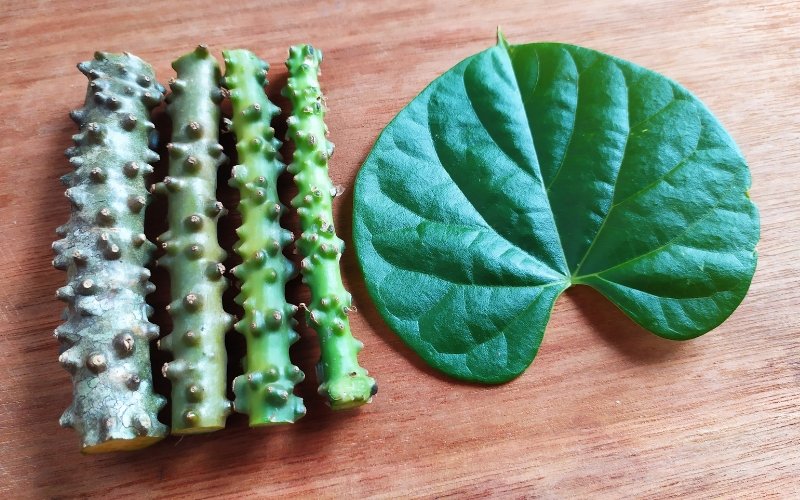
Guduchi (Tinospora cordifolia) is a bitter rasayana that Ayurveda uses to clear heat and support immunity. It also deserves extra care. Guduchi appears alongside ashwagandha and aloe vera in a 2026 review of herb-induced liver injury in the Journal of Pharmacognosy and Phytochemistry. Guduchi is only prescribed after a full health history.
Aloe vera
Aloe vera (kumari) is a bitter, cooling plant that Ayurveda uses both inside and out for Pitta. Applied to your skin, the gel is a soothing traditional choice after too much sun. Taken internally, aloe products vary widely and have been linked to liver injury in rare cases, so they belong under practitioner guidance.
Kitchen herbs and spices
Your spice rack can do a lot of gentle work for Pitta. Coriander seed, fennel and cardamom are the traditional Pitta-friendly trio. Cumin and turmeric suit Pitta in modest amounts. A tea of equal parts coriander, cumin and fennel seed is one of the simplest cooling drinks you can make at home.
Using herbs safely in Australia
Buy herbal products only when the label carries an AUST L or AUST R number. Australian law treats Ayurvedic products as complementary medicines, and the TGA holds them to the same quality and safety standards as any other medicine. An AUST L or AUST R number shows the product appears on the Australian Register of Therapeutic Goods.
A Pitta-friendly lifestyle: how to balance Pitta dosha every day
To balance Pitta dosha through lifestyle, you cool your surroundings, soften your pace and protect your rest. Food and herbs do only half the work. The other half happens in your daily routine (dinacharya), which Ayurveda treats as medicine in its own right.
Respect the Pitta hours
Ayurveda assigns Pitta two daily peaks: 10am to 2pm and 10pm to 2am. Use the daytime peak for focused work and your main meal. Use the night-time peak for sleep, because staying up past 10pm often brings a second wind that keeps your mind racing.
Aim to be in bed by 10pm. If you wake around 1am feeling hot or wired, that is classic Pitta timing.
Move without overheating
Pitta bodies love a challenge, which is exactly why exercise can overheat them. Choose swimming, walking or gentle yoga over hot yoga and midday runs. Train at a moderate effort and let go of the scoreboard.
The Sydney area has several spots where you can naturally exercise without overheating. An early ocean swim at Bondi or Bronte cools you from the outside in. A coastal walk at sunset does the same for your mind.
Cool the breath and the mind
Sheetali (cooling breath) is the classic Pitta breathing practice (pranayama). You curl your tongue into a tube and draw air through it, then breathe out through your nose. If you can’t curl your tongue, sheetkari works the same way with air drawn through your teeth.
Research on breathwork is growing. A 2025 meta-analysis of pranayama for anxiety and stress in the International Journal of Adolescent Medicine and Health found a moderate reduction in stress among adolescents. The authors call for more rigorous trials, so treat breathwork as a supportive habit rather than a cure.
Meditation and time near water are traditional ways to soften Pitta intensity. Evening walks under the moon are another favourite, because Ayurveda sees moonlight as cooling.
Manage the inner fire
Pitta stress is often self-made. Set a firm finish time for work and take your full lunch break. Schedule rest as you schedule meetings.
Notice when competitiveness creeps into parts of life that should feel easy, like weekend sport or family conversations. A little humour and a lot of shade go a long way.
Care for your skin with oil
Oil self-massage (abhyanga) calms Pitta when you choose cooling oils. Coconut and sunflower oil suit Pitta skin better than sesame oil, which Ayurveda considers heating. In summer, use the oil at room temperature and massage gently for 5 to 10 minutes before a lukewarm shower.
Pitta dosha treatment at Ayurvedic Wellness Centre
Pitta dosha treatment at our clinic starts with a full consultation because the right plan depends on your Prakriti and Vikriti. It also depends on your medical history. During an Ayurvedic Doctors Consultation, I look at your pulse and tongue. I also ask about your digestion, sleep, stress and lifestyle.
From there, we build a plan that may combine diet, herbs and hands-on therapies. Our Ayurvedic treatments include Abhyanga, Kizhi and Panchakarma. Therapeutic purgation (virechana) is the classical Panchakarma therapy for Pitta. We offer Panchakarma only after one of our Ayurvedic doctors prescribes it.
The first version of this article was published on February 11, 2016.
This article is general information about Ayurveda. It isn’t a substitute for advice from your GP or another registered health professional.
Sources
- The Relationship Between Nidra (Sleep) and Prakriti: An Ayurvedic Perspective on Sleep and Constitution – https://ijhsr.org/IJHSR_Vol.15_Issue.4_April2025/IJHSR-Abstract24.html
- Decoding gut microbiome diversity through Prakriti: Insights from an Ayurgenomics perspective: A narrative review – https://archive.cmb.ac.lk/handle/70130/8314
- Revisiting the tridosha paradigm of Ayurveda – https://ijme.in/articles/revisiting-the-tridosha-paradigm-of-ayurveda/
- Effect of Amla Extract on Body Mass Index, Waist Circumference, Total Body Fat, Visceral Fat, Skeletal Muscle Mass, Body Age, and Related Parameters: A Randomized, Open-Label Clinical Study in Obese Participants – https://karger.com/article/doi/10.1159/000545247
- Efficacy and safety of Shatavari root extract (Asparagus racemosus) for menopausal symptoms: a randomized, double-blind, three-arm, placebo-controlled study – https://www.frontiersin.org/journals/reproductive-health/articles/10.3389/frph.2025.1654503/full
- Comparative effects of Bacopa monnieri and Ginkgo biloba on cognitive functions: A systematic review and network meta-analysis – https://pubmed.ncbi.nlm.nih.gov/41678913/
- Bacopa – Merck Manual Professional Edition – https://www.merckmanuals.com/en-ca/professional/special-subjects/dietary-supplements/bacopa
- Brahmi Vati tablets (Ayurvedic medicine) – https://www.tga.gov.au/safety/safety-monitoring-and-information/safety-alerts/brahmi-vati-tablets-ayurvedic-medicine
- A comphrehensive review of herb induced liver injuries – https://www.phytojournal.com/archives/2026/vol15issue1/PartB/15-1-1-135.pdf
- A systematic review and meta-analysis to determine the effect of pranayama in reducing anxiety and stress in adolescents – https://www.degruyterbrill.com/document/doi/10.1515/ijamh-2025-0094/html