Classical Ayurvedic texts do not name high blood pressure because it could not be measured when the Charaka Samhita and Sushruta Samhita were written. Modern Ayurvedic scholars read the condition through the blood tissue (Rakta Dhatu), the channels that carry blood around your body and the three doshas.
Vyana Vata drives blood outward from the heart to every part of the body, while Prana Vata steadies the heart rate from its seat in the head. Sadhaka Pitta links to the heart’s rhythm. Avalambaka Kapha provides the heart with stability and nourishment.
When these forces fall out of balance, circulation loses its ease. The table below summarizes how each dosha relates to blood pressure in Ayurveda.
Causes and risk factors of high blood pressure according to Ayurveda
Ayurveda groups the causes of high blood pressure into three sources: diet, lifestyle and the mind.
Diet
Ayurvedic texts name excess salty (Lavana), sour (Amla), and pungent (Katu) tastes as key disturbers of the blood. Alcohol, alkaline substances, stale food, vinegar, and sour curd also appear on the list.
Heavy, oily, and incompatible meals are thought to weaken your digestive fire (Agni). Weak digestion leaves behind Ama, a sticky residue that can block channels and disturb Vyana Vata.
The World Health Organization’s hypertension fact sheet points to similar habits: a salty plate, too much saturated and trans fat, and too few fruits and vegetables.
Lifestyle
Too little movement, a sluggish routine, and frequent rich meals feed Kapha and add to fatty tissue (Meda) in Ayurveda. Sleeping during the day after heavy, oily meals is another disturber of the blood.
Age plays a part too. In later life, Ayurveda expects Vata to rise, and aggravated Vata is linked to less elastic blood vessels.
Mind
Ayurveda treats high blood pressure as partly psychosomatic, meaning your thoughts and feelings shape your body. Worry (Chinta), grief (Shoka), and fear (Bhaya) aggravate Vata, while anger (Krodha) inflames Pitta.
If you carry a lot of stress, this area may feel most relevant to you in Ayurveda for high blood pressure.
What the research says
The 2025 National Institute of Ayurveda review points mainly to everyday habits. The authors say an unbalanced diet and long hours of sitting can throw all three doshas and body tissues off course, with or without an inherited tendency.
Some risks sit outside your control, according to the World Health Organization. High blood pressure in your family, being older than 65, and living with diabetes or kidney disease all raise your chances.
How an Ayurvedic practitioner assesses you
An Ayurvedic consultation looks at your whole picture rather than one number. Your practitioner may use the eightfold examination (Ashtavidha Pariksha), including reading your pulse (Nadi Pariksha) and checking your tongue, eyes, and voice.
They will also ask about your digestion, sleep, emotions, and routine. This helps them understand your natural constitution (Prakriti) and current imbalance (Vikriti). That whole-person assessment starts Ayurveda for high blood pressure.
Pulse reading guides an Ayurvedic plan but does not replace a blood pressure monitor. A careful practitioner will ask for your recent readings and a list of medicines you take.
When to seek urgent care
A sudden spike to very high levels sometimes brings warning signs such as a pounding head, dizziness, nosebleed, or trouble seeing. Treat these signs as an emergency and go to the nearest hospital or call triple zero (000).
Ayurvedic herbal remedies for high blood pressure
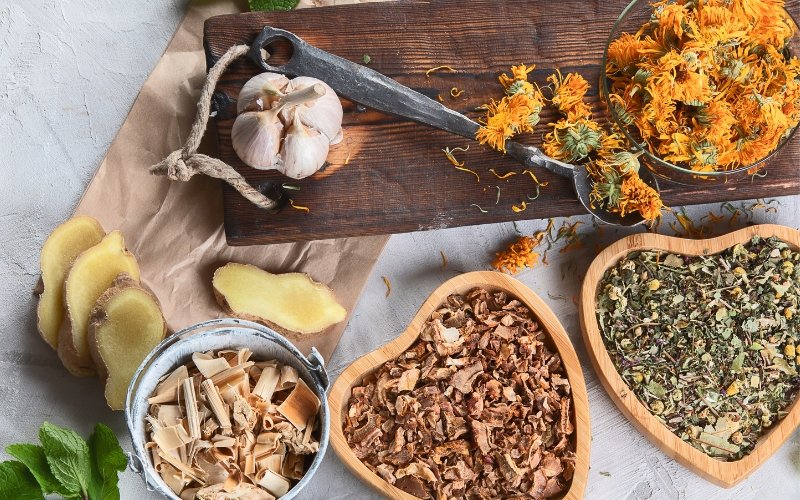
Ayurvedic herbs for high blood pressure are chosen for the person, not just the reading. Take them only with your doctor’s knowledge because combining herbs that affect circulation with blood pressure medicine is unsafe to try alone.
Herbs your practitioner may consider
Practitioners of Ayurveda for high BP most often discuss the herbs below. Each is usually given within a personalized formula rather than alone.
- Sarpagandha (Rauwolfia serpentina): A classical herb for calming the mind and circulation. The Therapeutic Goods Administration lists Rauwolfia serpentina as a prescription-only ingredient, so it is not something to buy or take on your own.
- Arjuna (Terminalia arjuna): A tree bark long valued in Ayurveda as a tonic for the heart.
- Ashwagandha (Withania somnifera): An adaptogen your practitioner may consider when stress drives your readings.
- Brahmi (Bacopa monnieri): A herb traditionally used for a settled, clear mind.
- Punarnava (Boerhavia diffusa): A herb traditionally used to support healthy fluid balance.
- Amalaki (Emblica officinalis): Indian gooseberry, prized as a cooling fruit that balances Pitta.
- Lasuna (garlic): A kitchen herb Ayurveda values for healthy circulation.
Buying herbs safely in Australia
In Australia, Ayurvedic products are in the listed (complementary) medicines category, so the quality and safety rules for other medicines apply. Still, the Therapeutic Goods Administration’s September 2025 safety advisory reports lead poisoning cases linked to Ayurvedic products bought overseas or without registration continue to reach the regulator.
Look for an AUST L or AUST R number on the pack. Victoria’s Chief Health Officer says this number means the product is legally allowed to be sold here.
In December 2025 the Therapeutic Goods Administration warned against one imported brand of Brahmi Vati tablets. Laboratory tests had detected mercury, lead, arsenic and cadmium at dangerous concentrations.
What the research says
A 2026 meta-analysis of nine trials in heart failure found that Arjuna did not significantly change blood pressure, although it improved some heart and cholesterol markers.
In a 2025 meta-analysis, people taking Ashwagandha reported less stress and anxiety than those given a placebo. A separate 2025 safety review of Ashwagandha urges extra caution if you are pregnant or live with a thyroid, liver or kidney condition.
The table below summarizes recent research findings for each herb.
Ayurvedic diet for high blood pressure
An Ayurvedic diet for high blood pressure centers on light, freshly cooked meals low in salt, sour, and fried foods. It aims to cool Pitta, steady Vata, and keep digestion strong to prevent Ama buildup. Food is the foundation of Ayurvedic treatment for high blood pressure.
Foods to enjoy more often
Many Ayurvedic practitioners build meals around these foods.
- Green gram (moong dal) and barley, both light and easy to digest
- Fresh vegetables such as zucchini, pumpkin and leafy greens
- Sweet, juicy fruits and fresh Amalaki when you can find it
- Cumin, coriander and fennel to flavour food in place of extra salt
Foods to limit
The foods below are those Ayurveda most often asks you to reduce.
- Salt, salty snacks and pickles
- Sour foods such as vinegar, sour curd and fermented condiments
- Alcohol, which Ayurveda considers heating for Pitta
- Fried, heavy and stale or reheated food
- Very hot and pungent dishes
What the research says
Few trials have tested an Ayurvedic diet alone, so the strongest support comes from principles both systems share. The 2025 High Blood Pressure Guideline-at-a-Glance gives its strongest advice grade to eating for heart health, with the Dietary Approaches to Stop Hypertension plan as its lead example.
It also asks you to eat less sodium, get more potassium from food, and drink less or no alcohol. Salt substitutes with potassium can help some people, though the guideline recommends closer monitoring if your kidneys are impaired or your medicines cause potassium buildup.
Ayurvedic lifestyle for high blood pressure
An Ayurvedic lifestyle for high blood pressure relies on routine: regular meals, regular sleep, and daily movement that refreshes you. Steady habits settle Vata, the dosha most closely tied to circulation.
Build a steady daily routine
Ayurveda calls this daily routine Dinacharya. The habits below offer a gentle starting point.
- Wake and go to bed at similar times each day.
- Eat your main meal at midday, when Ayurveda considers digestion strongest.
- Avoid long daytime naps, especially after heavy meals.
Move, rest and release stress
Gentle daily movement such as walking or swimming suits most people. Ayurveda cautions against overexertion, so aim for activity that warms you without exhausting you. This steady rhythm is central to Ayurvedic treatment for high blood pressure.
Ayurvedic home remedies for high blood pressure
Simple Ayurvedic home remedies for high blood pressure come from your kitchen and evening routine. They work best alongside medical care, so check any new remedy with your doctor if you take blood pressure medicine.
Small rituals like these offer an easy way to begin Ayurveda for high BP.
- Season with spices, not salt. Cumin, coriander, fennel and turmeric add depth so you reach for the salt shaker less.
- Add garlic to your cooking. Ayurveda values Lasuna for circulation, and cooked garlic is an easy way to include it.
- Enjoy Amalaki. Fresh or dried Indian gooseberry is a cooling fruit in the Ayurvedic view.
- Sip a warm hibiscus infusion. Hibiscus, known in Ayurveda as Ambasthaki, makes a tart and cooling tea.
- Try an evening foot massage. Padabhyanga with a little warm oil can be a calming way to wind down before sleep.
- Check your blood pressure at home. Keep a simple log to share with your doctor and your Ayurvedic practitioner.
Yoga for high blood pressure

Yoga for high blood pressure combines gentle postures, slow breathing and deep relaxation. It pairs naturally with Ayurveda because both aim to quiet an overactive Vata.
Postures to explore
A gentle class designed for blood pressure might include the practices below. Let your teacher know about your blood pressure so they can adapt strong inversions and breath-holding.
- Sukhasana (easy seated pose) with relaxed breathing
- Vajrasana (thunderbolt pose), a kneeling posture often used after meals
- Marjaryasana and Bitilasana (cat and cow), moving slowly with the breath
- Shavasana (corpse pose) for full-body relaxation
- Yoga Nidra, a guided deep relaxation practised lying down
Pranayama for a calmer system
Slow, unhurried breathing is the heart of pranayama for high blood pressure. Practices often taught include Nadi Shodhana (alternate nostril breathing), Bhramari (humming bee breath) and Sheetali (cooling breath).
Start with five to ten minutes a day and keep the pace comfortable. Yoga and pranayama fit well alongside Ayurveda for high BP, and many people enjoy practicing them at home.
What the research says
A 2025 meta-analysis of 30 randomised trials with 2283 participants found that yoga lowered blood pressure by about 8 mmHg systolic and 5 mmHg diastolic on average. Still, the authors graded their confidence in that evidence as very low, so more rigorous trials are needed.
A 2026 meta-analysis of seven trials with 683 people found that pranayama consistently slowed the heart rate, while its effect on blood pressure was smaller and less certain. A 2025 review of pranayama in mental health noticed that side effects showed up more often with rapid breathing styles than with slow ones.
Panchakarma and Ayurvedic treatments for high blood pressure at Ayurvedic Wellness Centre
Panchakarma is the structured cleansing programme of Ayurveda. For blood pressure concerns, classical practice often focuses on Virechana (therapeutic purgation) to clear excess Pitta and Basti (medicated enema) to settle Vata.
Your practitioner tailors the preparation, diet, and rest days to your constitution and current health. Panchakarma is not suitable for everyone. We will ask about your medicines, recent readings, and any heart or kidney conditions before recommending it.
Supportive therapies
Gentler treatments, each chosen to calm Vata and Pitta, can also form part of your plan.
- Shirodhara: A steady stream of warm herbal oil poured over the forehead to settle the mind.
- Abhyanga: A full-body warm oil massage that grounds Vata.
- Kizhi: Also called potli massage, warm herbal pouches pressed over the body to deepen relaxation.
You can read more about each option on our Ayurvedic treatments page. This is how we approach Ayurvedic treatment for high blood pressure: gently, personally, and always alongside your doctor.
If you would like personalised guidance, book a consultation with an Ayurvedic Wellness Centre practitioner and bring your latest readings and medication list. Together we can build a plan for Ayurveda for high blood pressure that respects both your doctor’s advice and your own constitution.
Sources
- Update from the National Hypertension Taskforce of Australia: prevalence, treatment and control rates of hypertension between 2022 and 2024, implications and future directions – https://pmc.ncbi.nlm.nih.gov/articles/PMC13336605/
- Hypertension in Australia, Summary – https://www.aihw.gov.au/reports/risk-factors/hypertension/contents/summary
- Understanding Hypertension in Ayurveda: A Review Article – https://jaims.in/jaims/article/view/4995
- Hypertension – https://www.who.int/news-room/fact-sheets/detail/hypertension
- Importing or supplying sport supplements – https://www.tga.gov.au/resources/guidance/importing-or-supplying-sport-supplements
- Imported Ayurvedic products found to contain dangerous heavy metals – https://www.tga.gov.au/safety/safety-monitoring-and-information/safety-alerts/imported-ayurvedic-products-found-contain-dangerous-heavy-metals
- Warning on Ayurvedic medicines – https://sephu.org/latest-news/2025/01/20/warning-on-ayurvedic-medicines/
- Brahmi Vati tablets (Ayurvedic medicine) – https://www.tga.gov.au/safety/safety-monitoring-and-information/safety-alerts/brahmi-vati-tablets-ayurvedic-medicine
- Evaluation of the Therapeutic Potential and Safety of Terminalia arjuna in Heart Failure Management: A Systematic Review and Meta-analysis of Randomized Controlled Trials – https://pubmed.ncbi.nlm.nih.gov/42389976/
- Effects of Ashwagandha Supplements on Cortisol, Stress, and Anxiety Levels in Adults: A Systematic Review and Meta-Analysis – https://pmc.ncbi.nlm.nih.gov/articles/PMC12242034/
- Evaluating the Safety of Ashwagandha as a Food Additive: A Focus on Reproductive, Thyroid, and Immune System Effects – https://pubmed.ncbi.nlm.nih.gov/41454545/
- 2025 High Blood Pressure Guideline-at-a-Glance – https://www.jacc.org/doi/10.1016/j.jacc.2025.07.010
- A systematic review and meta-analysis of yoga for arterial hypertension – https://pmc.ncbi.nlm.nih.gov/articles/PMC12077774/
- The effect of yogic breathing (Pranayama) on heart rate and blood pressure in patients with hypertension: A systematic review and meta-analysis – https://pubmed.ncbi.nlm.nih.gov/41580026/
- Effectiveness of pranayama for mental disorders: a systematic review and meta-analysis of randomized controlled trials – https://pmc.ncbi.nlm.nih.gov/articles/PMC12392162/