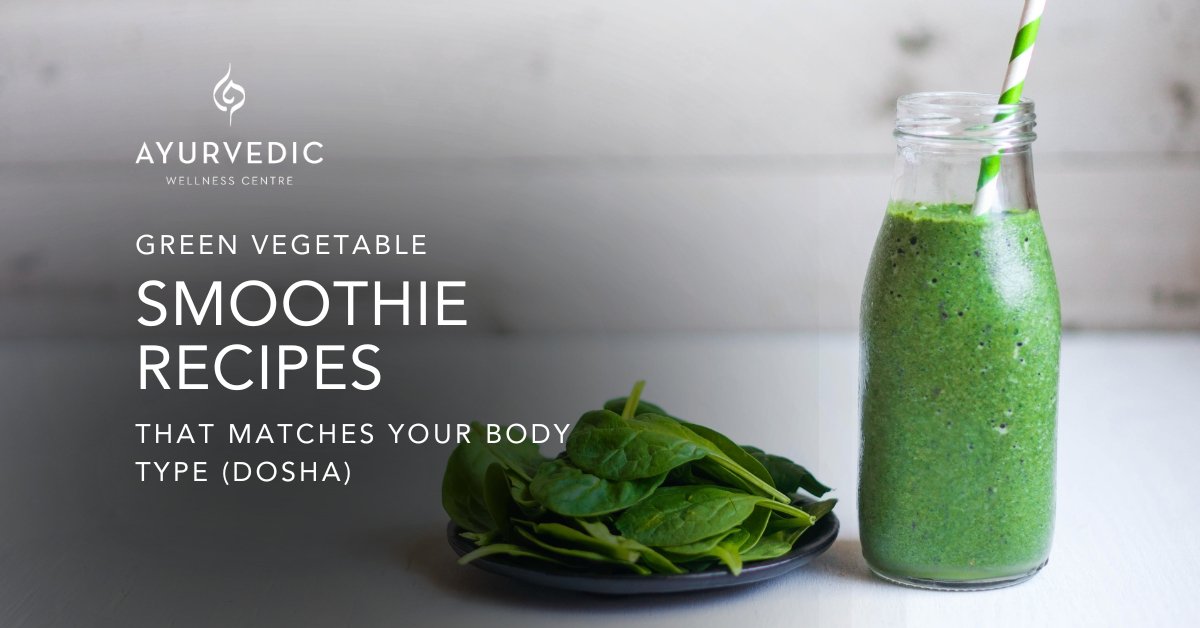
Green vegetables provide a dense package of vitamins, minerals and fibre for few kilojoules. Dark leaves such as spinach and kale supply vitamin K, folate and lutein. Their natural nitrates may convert to nitric oxide, a compound tied to healthy blood pressure and blood vessel function.
Most of us do not eat enough leafy greens. The green vegetable smoothie recipes in this guide can help you add a healthy intake without overhauling your diet. It will not replace a plate of cooked vegetables, but it can be a gentle bridge toward one.
Dosha-specific green smoothie recipes
Ayurveda values leafy greens for their bitter (tikta) and astringent (kashaya) tastes. These tastes traditionally cool and lighten the body. How that plays out depends on your mind-body energies (doshas).
Find out your body’s constitution by taking this dosha quiz.
Choose the recipe that matches your dosha or the element that feels out of balance right now. Each green vegetable smoothie recipe below serves one person and takes about ten minutes. Use room-temperature or lukewarm liquid and skip the ice in every version.
Vata: warm spinach, beetroot and almond smoothie
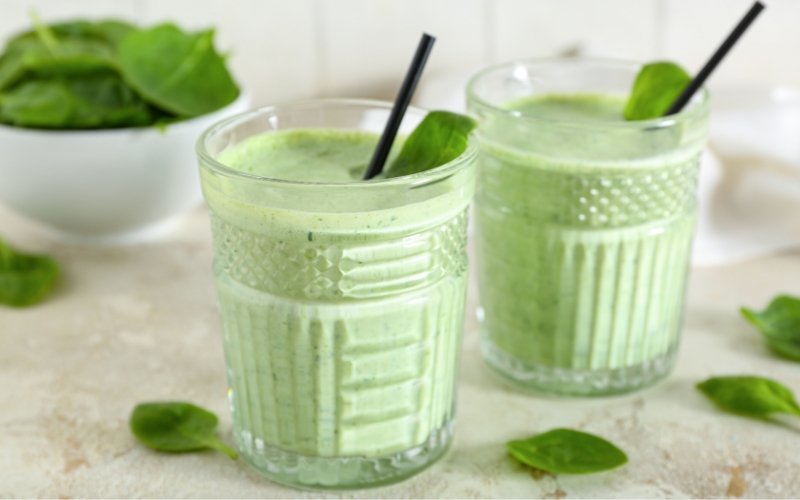
This blend suits you if you run cold, feel anxious or notice irregular digestion. Gather these green vegetable smoothie ingredients before you start:
- 1/4 cup almonds, soaked overnight
- 3 dates, soaked
- 1/3 cup warmed coconut milk
- 1 handful of spinach
- 1 handful of cooked beetroot, chopped
- 1 teaspoon cinnamon
- 1 teaspoon ginger
- 1/4 teaspoon nutmeg
- 1/4 teaspoon cardamom
This green vegetable smoothie preparation keeps the drink warm from start to finish:
- Drain the soaked almonds and dates.
- Add them to the blender with the warmed coconut milk, spinach, beetroot and spices.
- Blend until smooth, loosening it with a splash of warm water if it feels too thick.
- Drink it warm and sip slowly.
Start with a little ginger and adjust to taste. If your digestion is delicate, you can lightly steam the spinach first.
Pitta: cooling kale, avocado and pineapple smoothie
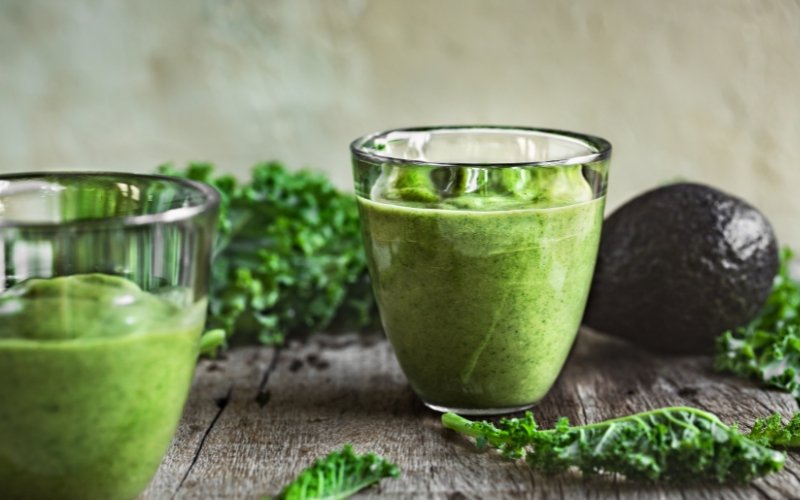
This blend suits you if you run warm, feel irritable in the heat or notice acid reflux. Here are the green vegetable smoothie ingredients for the Pitta version:
- 1/2 ripe avocado
- 1/2 cup coconut milk
- 1/2 cup coconut water
- 1 cup chopped sweet, ripe pineapple
- 1 handful of kale
- 1 teaspoon maple syrup, or to taste
- A pinch of pink Himalayan salt
Follow these steps for a smooth and cooling result:
- Put everything in a high-speed blender.
- Blend until completely smooth.
- Taste, then adjust the sweetness and salt.
- Drink it at room temperature.
Choose a sweet pineapple rather than a sour one, because Ayurveda favours sweet fruit for Pitta.
Kapha: strawberry, ginger and green smoothie
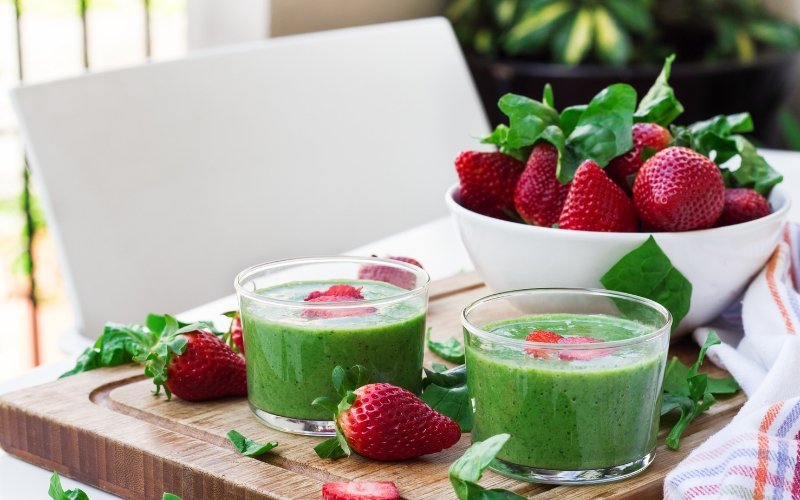
This blend suits you if you feel heavy, sluggish or congested. Consider this smoothie as a spring recipe and a way to move into summer.
Keep these green vegetable smoothie ingredients on hand:
- 1/2 cup room-temperature water
- 1/2 cup apple juice
- 6 whole strawberries
- A squeeze of lemon, about one-sixth of a fruit
- A very small piece of fresh ginger, about 3 mm (1/8 inch)
- 1/4 cup rocket (arugula)
- 1/3 cup spinach
- 1/3 cup baby kale
- 1 teaspoon honey
The method is short:
- Add all the ingredients to a blender.
- Blend until smooth.
- Drink it at room temperature.
This recipe has no added fat, which fits the light and low-oil approach Ayurveda suggests for Kapha.
Pairing greens with a little fat
Fat helps your body absorb the fat-soluble nutrients in leafy greens. In a lab model of digestion, kale released very few of its carotenoids until oil was added, and this held for both raw and cooked samples. The details are in the University of Missouri kale study from November 2025.
The Vata blend gets its fat from almonds and coconut milk, and the Pitta blend gets it from avocado and coconut milk. The Kapha blend has none, so you could drink it alongside a lunch that includes a little healthy fat. Keep in mind that this was a lab study and not a trial in people.
Green vegetable smoothie preparation tips for every dosha
A few simple habits make any blend kinder to your digestion. Use these alongside whichever recipe you choose:
- Wash leafy greens thoroughly, especially from a home garden or farmers’ market.
- Blend fresh and drink soon after, instead of storing it overnight.
- Sip slowly and hold each mouthful for a moment before swallowing.
- Taste before you add extra sweetness, since these blends already contain fruit, dates or juice.
- Rotate your greens through the week instead of using spinach every day.
Ingredient substitutions
You can swap most green vegetable smoothie ingredients as long as you keep the dosha intention behind the original. The table below covers allergies and dairy-free needs, plus a local Australian green.
Always discard the blanching water from Warrigal greens before blending. Treat silverbeet the same if you eat it often because it is also high in oxalates.
Why you should skip the ice
Ayurveda is cautious about cold and raw blends because they can dampen your digestive fire (agni). Weak agni is linked in Ayurvedic texts to a build-up of undigested residue (ama). You may notice ama as heaviness, a coated tongue or bloating after meals.
Classical Ayurveda also flags certain pairings as incompatible foods (viruddha ahara). Banana or sour fruit blended with milk sits on that list, and so does honey that has been heated. Cold drinks and smoothies in winter count as a seasonal mismatch in this 2025 review of incompatible food combinations in Ayurveda.
So I do not ask you to give up smoothies. I ask you to make them warmer, simpler and better suited to your body. Good green vegetable smoothie preparation starts with your digestion and works outward.
When to drink your smoothie
The best time is mid-morning or with lunch when Ayurveda considers your agni strongest. Warm months suit smoothies best, making the Australian summer from December to February their natural season.
The table compares the moments that suit a green smoothie with the moments to skip or adapt it.
If you love a smoothie in winter, warm it slightly and add extra ginger. Drink it at lunch rather than breakfast.
Cautions and contraindications
Green smoothies are food, but concentrated food can interact with your health conditions and medicines. Speak with your GP or pharmacist before making a daily smoothie routine if any of the situations below apply to you.
Blood thinners and vitamin K
If you take warfarin, sudden jumps in vitamin K from leafy greens can change how your medicine works. Half a cup of cooked kale has 531 micrograms of vitamin K, and one cup of raw spinach has 145 micrograms. You do not need to avoid greens because the goal is a steady daily amount. You can check typical values in this guide to vitamin K in foods.
Oxalates and kidney stones
Spinach is high in oxalates, natural compounds that can combine with calcium in your urine. Calcium stones are the most common kidney stones. If you are prone to stones, rotate lower-oxalate greens and keep calcium-rich foods in your diet rather than cutting them out. You can find a practical food list in the Cleveland Clinic kidney stones diet guide.
Our hot Australian climate is a risk factor for stones. Between 30 and 50% of people who have one kidney stone develop another within five years. A practical hydration goal is enough water each day for your urine output to reach roughly 2.5 litres, a target set out in the Kidney Health Australia kidney stones fact sheet.
Herbs, spices and supplements
Kitchen amounts of ginger and turmeric differ from concentrated capsules and powders. Some people find ginger leaves them with a burning chest or unsettled stomach, and it may interact with medicines. Review the National Center for Complementary and Integrative Health ginger fact sheet if you take regular medication.
Curcumin capsules engineered for higher absorption have been tied to cases of liver damage. Turmeric supplements may be unsafe during pregnancy. You can review warning signs, such as dark urine or yellowing skin, in the National Center for Complementary and Integrative Health turmeric fact sheet. A pinch of turmeric in your smoothie is a culinary amount, not a supplement dose.
Ayurvedic herbal powders sold as medicines in Australia usually carry an AUST L number on the label. That number means the sponsor has certified the product, and the Therapeutic Goods Administration has not checked if it works before sale. You can see how the Therapeutic Goods Administration reviews these products in its listed medicine compliance update for December 2025. Add herbs such as ashwagandha or triphala only with guidance from a qualified practitioner.
When to pause or adapt
Some signals show a smoothie is not serving you right now. Pause or talk to your practitioner if any of these apply:
- You feel bloated, gassy or heavy after smoothies.
- You have a cold, a cough or chest congestion.
- You are pregnant, breastfeeding or making a smoothie for a young child.
- You manage diabetes and need to watch the sugar in fruit.
- You live with a digestive condition such as irritable bowel syndrome or reflux.
- You take regular prescription medicines.
Finding the blend that suits you
At the Ayurvedic Wellness Centre in Bondi Junction, Dr Taruna Yadav and I can help you shape a green vegetable smoothie routine that suits your body and the local climate. If you want a personalised plan, book an Ayurvedic doctor’s consultation with our team.
The first version of this article was published on February 9, 2016.
This article shares general Ayurvedic wellness information and does not replace advice from your GP or another registered health practitioner. Ayurvedic practices are not a treatment for any medical condition. Always seek medical care for severe or worsening symptoms.
Sources
The research, regulations and statistics in this article come from the following pages:
- Conceptual Study of Prakriti and Its Role in Maintaining Health: A Review Article – https://jaims.in/jaims/article/view/4550
- Viruddhahara in Ayurveda: A Classical and Contemporary Perspective on Incompatible Food Combinations – https://jaims.in/jaims/article/view/4542
- Mizzou researchers find simple way to make kale healthier – https://showme.missouri.edu/2025/mizzou-researchers-find-simple-way-to-make-kale-healthier/
- Vitamin K in Foods – https://www.drugs.com/cg/vitamin-k-in-foods-discharge-care.html
- Kidney Stones Diet: What To Eat and Avoid – https://health.clevelandclinic.org/kidney-stones-diet
- Kidney stones fact sheet 2025 – https://kidney.org.au/wp-content/uploads/2025/10/KHA-Factsheet-kidney-stones-2025.pdf
- Ginger: Usefulness and Safety – https://www.nccih.nih.gov/health/ginger
- Turmeric: Usefulness and Safety – https://www.nccih.nih.gov/health/turmeric
- Listed medicine compliance reports: December 2025 update – https://www.tga.gov.au/news/news-articles/listed-medicine-compliance-reports-december-2025-update
- Prakriti (constitutional typology) in Ayurveda: a critical review of Prakriti assessment tools and their scientific validity – https://www.frontiersin.org/journals/medicine/articles/10.3389/fmed.2025.1656249/full