
Your skin isn’t something to fix but to understand. That principle is at the heart of Ayurvedic skincare and changes how you choose everything that goes on your face.
Why should you care? If you’ve cycled through cleanser after cleanser and seen the same dryness, redness or breakouts return, you’ve been treating the message instead of reading it. This guide will show you how to read it.
What is Ayurveda, really?
Ayurveda is a system for understanding balance in the body and mind. The name comes from two Sanskrit words: ayur means life and veda means knowledge. Together they mean “the science of life”. It’s also one of the oldest medical systems still practised today. Classical texts like the Charaka Samhita laid out its principles more than 2,000 years ago.
So what does that mean for you? Ayurveda focuses less on fixing what’s broken and more on keeping you in balance. The goal is a calm mind, a healthy body and a balanced spirit, with prevention and longevity built in.
Why does root cause matter so much?
Ayurveda always asks one question first: “Why has this shown up?” This question distinguishes root-cause care from symptom chasing.
Why does Ayurveda treat your skin as information?
In Ayurveda, your skin is a messenger. Every change on the surface points to something happening underneath.
Different skin concerns tell different stories:
- Dry skin tells one story.
- Red, inflamed skin tells another.
- Congested skin tells something different again.
Most modern routines respond to each story with a new product. Ayurveda asks you to look beneath the surface first. Once you understand why your skin behaves a certain way, you can restore balance instead of reacting to every flare-up.

What are the three doshas?
The three doshas are the energies that shape how your body and your skin behave. Ayurveda teaches that the five elements of nature (space, air, fire, water and earth) combine to form them.
Each dosha has its own job:
- Vata combines air and space. It governs movement.
- Pitta combines fire and water. It governs transformation.
- Kapha combines water and earth. It governs stability.
Everyone has all three doshas. But most people lean toward one or two, and that lean shows up surprisingly clearly on your skin.
What does each dosha need?
Here’s the simplest way to remember it: nourish Vata skin, cool Pitta skin and stimulate Kapha skin. Keep those verbs in mind because they’ll guide nearly every skincare choice you make.
What does Vata skin look like, and what does it need?
Vata skin is dry, light, cold and delicate. It carries the qualities of air and space, so it tends to feel tight, thin or dehydrated.
Signs you have Vata skin
You’ll recognise Vata skin by how quickly it dries out. Look for these signs:
- Your skin feels dry again soon after you moisturise.
- It looks dull, flaky or less plump.
- Fine lines show up earlier because moisture gets depleted.
- It gets noticeably worse with age, winter and stress.
Sound familiar? The key insight is that dry skin doesn’t just need moisture. It needs nourishment.
Ayurvedic ingredients for Vata skin
Vata skin loves warmth and richness. These traditional Ayurvedic ingredients deliver both:
- Sesame oil is warming and deeply moisturising. It’s one of the most traditional oils in Ayurveda.
- Aloe vera helps your skin hold hydration and supports the skin barrier.
- Licorice (Yashtimadhu) has long been used to support complexion and repair.
- Vetiver (Ushira) is a cooling root traditionally used for hydration.
Vata skin is like a dry garden where a quick sprinkle evaporates in minutes, but rich soil holds water for days.
What does Pitta skin look like, and what does it need?
Pitta skin is hot, sharp and intense. It carries the qualities of fire and water, so it tends to be sensitive, flushed or reactive.
Signs you have Pitta skin
Pitta skin often looks great until it suddenly doesn’t. Watch for these patterns:
- It has a natural glow but reacts quickly.
- It flushes after sun, exercise, wine or heat.
- It shows redness, inflamed breakouts or pigmentation.
Through the Ayurvedic lens, this points to excess heat in the system. Hot skin doesn’t need more stimulation. It needs calming.
That’s why aggressive peels and a cabinet full of actives can make Pitta skin worse. You’re pouring fuel on a fire that’s already burning.
Ayurvedic ingredients for Pitta skin
Pitta skin responds best to ingredients that cool and soothe:
- Manjistha is traditionally used for a clearer, brighter complexion.
- Priyangu is used to soothe redness and irritation.
- Aloe vera cools and hydrates without feeling heavy.
- Neem and Tulsi (holy basil) cleanse and calm when your skin feels irritated.
What does Kapha skin look like, and what does it need?
Kapha skin is heavy, cool, stable and moist. It carries the qualities of water and earth, so it usually stays hydrated but can become oily or congested.
Signs you have Kapha skin
Kapha skin is often the envy of your friends in winter but comes with its own challenges:
- It feels soft, smooth and well hydrated.
- It develops enlarged pores, an oily T-zone or congestion.
- It looks heavy or dull when circulation slows down.
Why does stripping oil backfire?
Most mainstream advice tells oily skin to strip, dry and mattify. Ayurveda takes the opposite approach and encourages movement.
Harsh stripping is like bleaching a pond: the surface clears for a day, then the whole ecosystem fights back. Don’t rush to strip Kapha skin. Gently stimulate it.
Ayurvedic ingredients for Kapha skin
Kapha skin thrives on warmth and circulation. These ingredients get things moving:
- Cinnamon supports warmth and circulation.
- Neem supports a healthy oil balance.
- Tulsi purifies while still calming the skin.
- Turmeric and saffron are treasured for brightness and glow.
What if your skin shows more than one dosha?
Most people recognise more than one dosha in their skin, which is normal. Dry cheeks with an oily T-zone, for example, is a mix of Vata and Kapha patterns.
Your skin also changes over time. Age and the seasons shift it. So do stress, sleep and diet.
That’s why Ayurveda refuses to fit everyone into one box. There’s no single perfect product in Ayurvedic skincare, only the right approach for you now. If you’re not sure where you land, the Ayurvedic Wellness Centre dosha quiz helps you pinpoint your dominant pattern.
What daily habits support Ayurvedic skincare?
Three habits do more for your skin than any product: consistency, nourishment and listening. None cost a cent, making them the best deal in skincare.
Build consistency into your daily routine
Regular sleep and consistent meal times create steadiness your skin reflects. Ayurveda calls this daily rhythm dinacharya. Your skin runs on a clock, so give it a predictable one.
Choose nourishment over trends
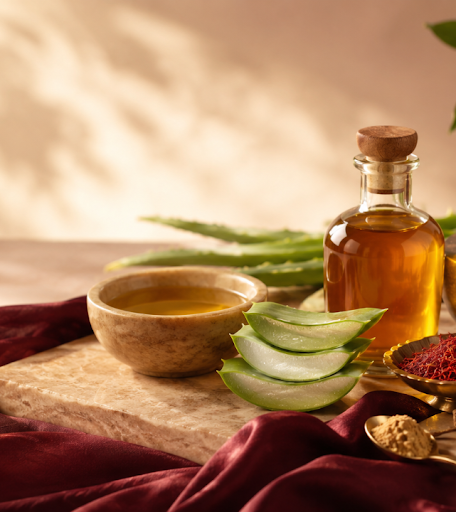
Pick ingredients that support your skin type instead of chasing every trend on TikTok or Instagram. Stop throwing products at your face and hoping something sticks. A soothing aloe vera gel will do more for Pitta skin than the viral acid serum of the month.
Listen to what your skin is telling you
When your skin changes, ask what else changed first. Check your sleep and stress levels. Then look at your digestion, diet and the season. Your skin usually answers a question your body asked days ago.
Where should you start with Ayurvedic skincare?
Start by noticing. Look at your skin tomorrow morning and ask which story it tells: dry and tight, red and reactive, or oily and congested.
This goes beyond clearer skin. When you learn to read your skin, you learn to read yourself. You start catching stress, poor sleep and seasonal shifts before they turn into flare-ups.
Want a head start? Take the Ayurvedic Wellness Centre dosha quiz to see which pattern your skin leans toward. And if you’d like one-on-one guidance, book a consultation at Ayurvedic Wellness Centre in Bondi Junction to get a personalised skincare plan around your unique mix of doshas.